
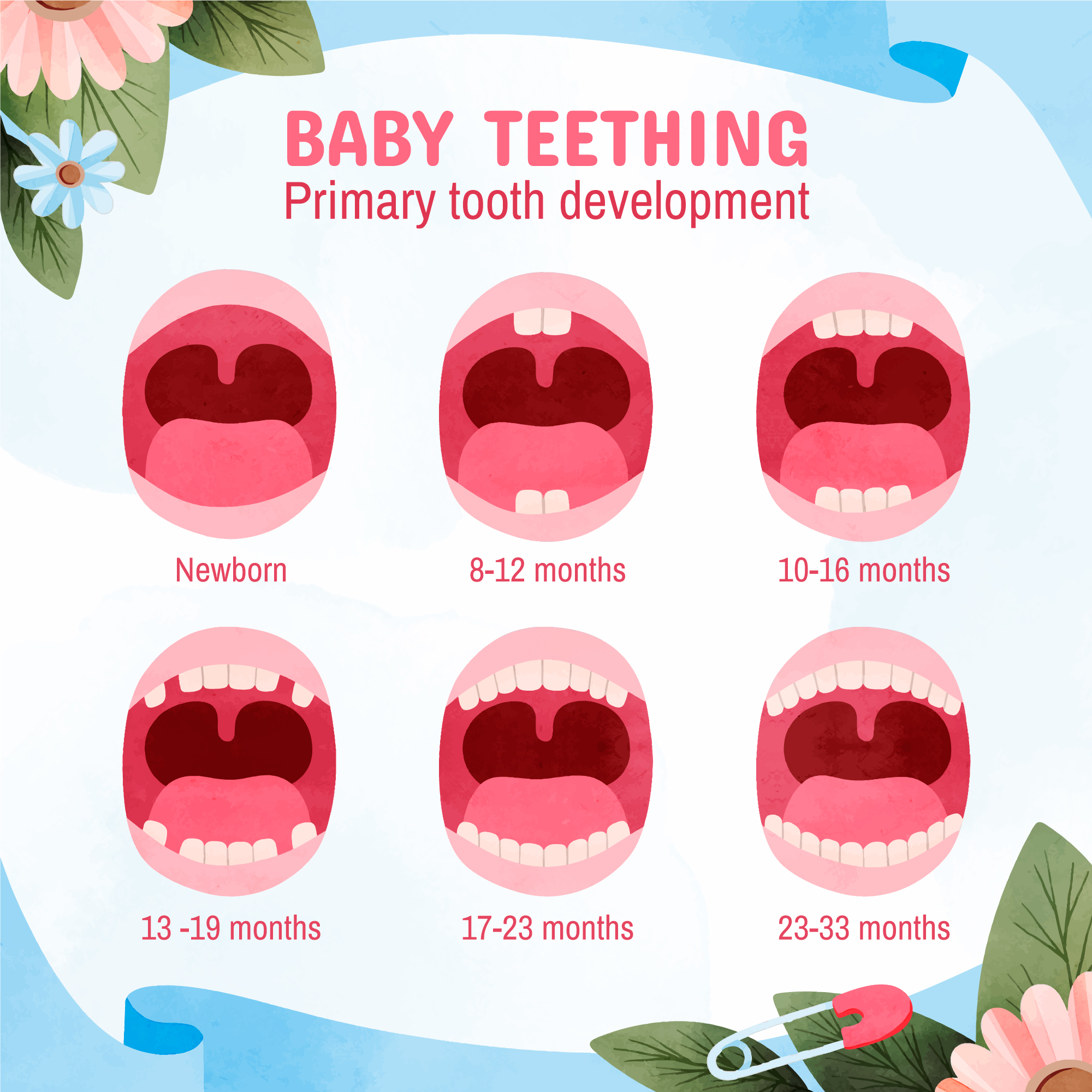
Teething is one of the most exciting yet challenging milestones in a baby’s first year. As those tiny white pearls start to appear, many parents notice changes in their little one’s behavior—from drooling and fussiness to chewing on everything within reach. Knowing when each tooth is expected to erupt can make the journey smoother for both baby and parents. That’s where an infant teething chart comes in handy.
Table of Contents
What Is Infant Teething?
Infant teething is the natural process where a baby’s primary teeth (milk teeth) break through the gums. These teeth are essential for chewing, speaking, and guiding permanent teeth into place later on.
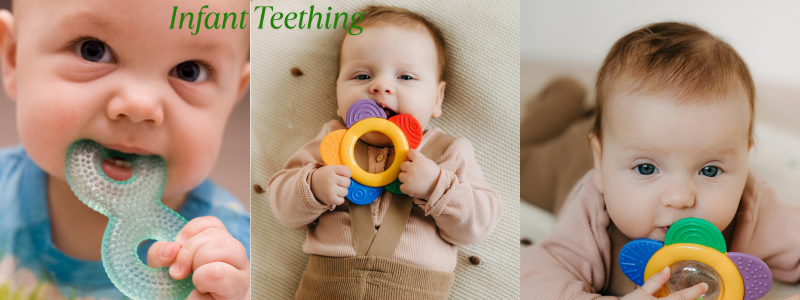
When Does Infant Teething Start?
Most babies begin teething between 4 and 7 months, but every child is different. Some may show their first tooth earlier, while others may not get their first tooth until after their first birthday.
General Timeline of Baby Teeth Eruption
Lower Central Incisors (6–10 months)
Typically, a baby’s teething journey begins with the lower front teeth.
Upper Central Incisors (8–12 months)
Next, the top front teeth pop through, giving babies their first big smile.
Upper Lateral Incisors (9–13 months)
These appear on either side of the top front teeth.
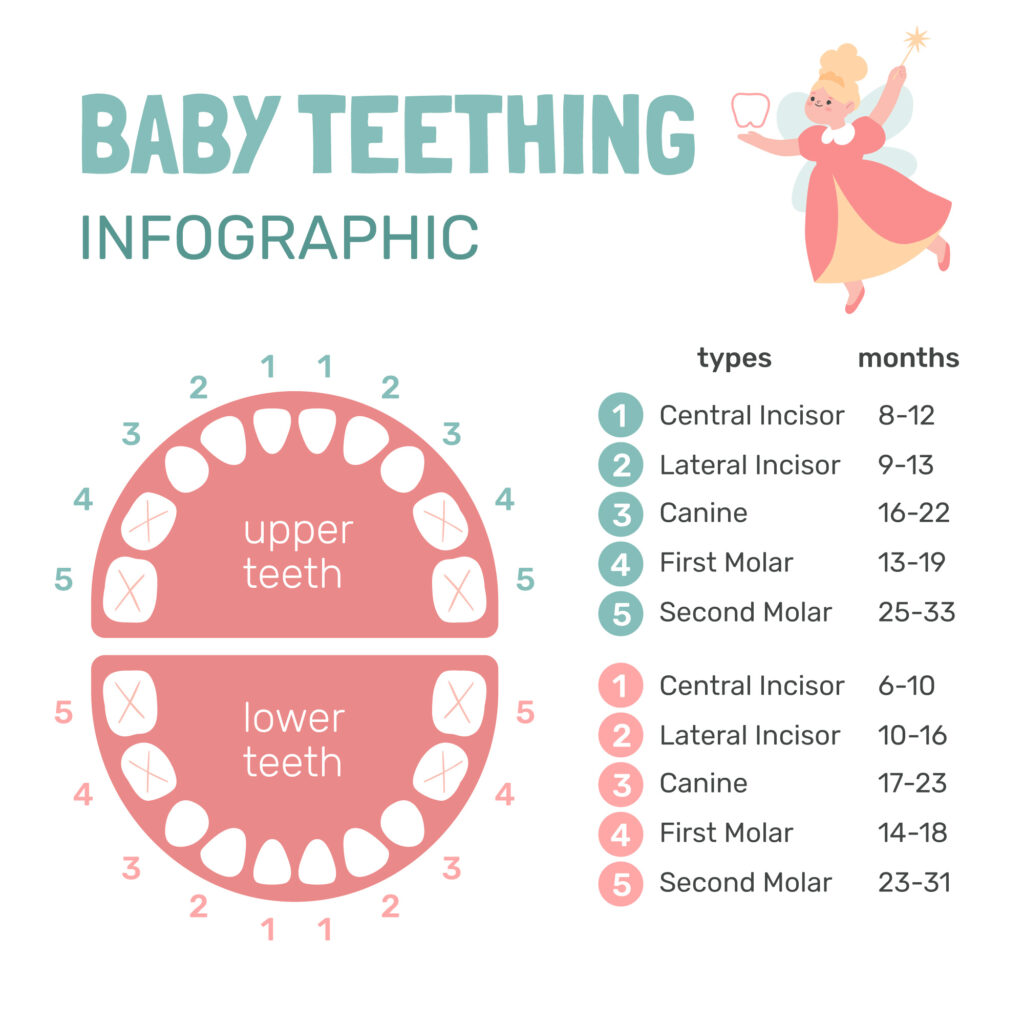
Lower Lateral Incisors (10–16 months)
These come in next to the bottom central incisors.
First Molars (13–19 months)
Bigger teeth at the back, perfect for chewing.
Canines or Cuspids (16–23 months)
Pointed teeth between incisors and molars.
Second Molars (23–33 months)
The last set of primary teeth, usually in place by age 3.
Complete Infant Teething Chart (Month-by-Month)
Tooth Age of Eruption
Lower Central Incisors 6–10 months
Upper Central Incisors 8–12 months
Upper Lateral Incisors 9–13 months
Lower Lateral Incisors 10–16 months
First Molars (upper/lower) 13–19 months
Canines (upper/lower) 16–23 months
Second Molars (upper/lower) 23–33 months
By the age of 3 years, most children will have a complete set of 20 baby teeth.
Signs and Symptoms of Teething
Drooling
Increased saliva production is one of the earliest signs.
Gum Irritation
Red or swollen gums are common as teeth push through.
Chewing and Biting
Babies bite toys, fingers, or anything they can grab for relief.
Sleep Disruption
Teething discomfort can make it harder for babies to sleep peacefully.
Appetite Changes
Some babies may refuse food or breastfeeding due to sore gums.
How Long Does Teething Last?
Each tooth can take about a week to fully erupt—with discomfort usually peaking 3–5 days before the tooth breaks through.
Common Myths About Infant Teething
• Teething causes high fever: False. Mild temperature rise is possible, but high fever means something else.
• Diarrhea is a normal part of teething: Not true—consult a doctor if it occurs.
Best Remedies for Teething Discomfort
Safe Teething Toys
Silicone and BPA-free teethers provide safe chewing relief.
Gum Massage
Rubbing your baby’s gums gently with a clean finger eases pain.
Cold Washcloth or Chilled Foods
The cooling effect numbs sore gums naturally.
Over-the-Counter Relief
Only use doctor-approved teething gels or medicines.
Teething and Fever: What’s Normal and What’s Not?
A mild rise in temperature is common, but a fever over 100.4°F (38°C) is not due to teething and should be checked by a pediatrician.
Oral Hygiene During Infant Teething
• Use a soft baby toothbrush or damp cloth to clean gums and teeth.
• Never let your baby fall asleep with a bottle, as it can lead to tooth decay.
When to Visit a Pediatric Dentist
Experts recommend the first dental visit by age 1 or within 6 months of the first tooth erupting.
Tips for Parents to Make Teething Easier
• Keep extra bibs for drool.
• Offer safe chewing options.
• Stick to a bedtime routine despite fussiness.
• Stay patient—teething is temporary!
Teething Safety Precautions
• Never freeze teethers (they can hurt gums).
• Avoid teething necklaces—they pose a choking hazard.
• Don’t rub alcohol or unsafe substances on gums.
Newborn teether toys
Newborn teether toys provide safe chewing relief for sore gums, reduce fussiness, and encourage sensory development. Made from BPA-free, baby-friendly materials, they soothe discomfort while keeping little ones engaged and happy during teething.
Wisdom teeth removal cost
The cost of wisdom teeth removal varies depending on factors like location, complexity, and anesthesia. On average, simple extractions cost $75–$200 per tooth, while impacted wisdom teeth can cost $250–$600 each.
Molar teeth implant
A molar teeth implant restores chewing strength, replaces missing back teeth, and provides long-lasting, natural-looking support for a healthy smile.
Are teeth bones
Teeth are not bones, although they seem similar. Unlike bones, teeth cannot heal themselves because they lack living cells. The structure of teeth consists of enamel, dentin, pulp, and cementum.
A Deeper Look at Infant Teething
Teething is more than just teeth cutting through gums—it’s a developmental process that plays a role in your baby’s growth. Those tiny teeth are preparing your child for chewing solid foods, speaking clearly, and even shaping their jawline. While every parent dreads sleepless nights and endless drooling, understanding the process helps make it less stressful.
Detailed Infant Teething Timeline
While the teething chart gives you a quick overview, let’s break down the journey in more detail.
Stage 1: Birth to 6 Months (Pre-Teething Stage)
• Babies are born with teeth buds hidden under their gums.
• Even though you can’t see teeth, gum irritation and early chewing behaviors may appear closer to 4–5 months.
Stage 2: 6 to 12 Months (First Teeth Emerge)
• Lower and upper incisors come in, giving your baby that first toothy smile.
• Drooling increases significantly.
• Babies may experience mild fussiness and clinginess.
Stage 3: 12 to 18 Months (Molars Start Appearing)
• Bigger back teeth push through, often causing more discomfort than front teeth.
• Babies start learning to chew better, preparing them for a wider range of foods.
Stage 4: 18 to 24 Months (Canines Erupt)
• These sharp teeth break through between molars and incisors.
• Sleep disturbances are common during this phase.
Stage 5: 24 to 33 Months (Second Molars Finish the Job)
• By now, most toddlers have a nearly complete set of 20 baby teeth.
• Teething discomfort should ease as the process nears completion.
Why Some Babies Struggle More Than Others
Not all babies go through Infant teething the same way. Some sail through with barely a whimper, while others fuss for days before each tooth erupts. Factors that may influence the severity of teething symptoms include:
• Pain threshold – Babies, like adults, have different pain sensitivities.
• Timing – Early teethers may show stronger symptoms since their gums are less developed.
• Number of teeth erupting – Sometimes multiple teeth break through together, intensifying discomfort.
• Overall health – Babies fighting colds or mild infections may appear fussier during teething.
The Emotional Side of Teething
Teething doesn’t just affect the baby—it impacts the whole household. Sleepless nights, endless crying, and clinginess can leave parents exhausted. This is why it’s important to practice patience, stay calm, and remember that teething is a temporary phase. Think of it as your little one’s way of growing stronger.
Parenting Hacks for Teething Relief
Let’s make teething easier with some tried-and-tested tips:
• Rotate Teethers: Keep multiple teething toys handy so one is always chilled and ready.
• Massage Before Bedtime: Gently rub your baby’s gums to relax them before sleep.
• Offer Distraction: Playtime, music, and cuddles often help distract babies from discomfort.
• Stay Consistent with Routines: A solid bedtime routine can minimize sleep disruption even during teething.
What Not to Do During Teething
Many well-meaning parents try remedies that may actually harm their baby. Avoid these at all costs:
• Amber Teething Necklaces: They pose choking and strangulation risks.
• Frozen Teething Toys: Extremely hard textures can damage delicate gums.
• Sugary Remedies: Dipping pacifiers in honey or syrup can cause cavities and even serious health issues.
• Unapproved Gels or Tablets: Always consult your pediatrician before using medicated teething products.
Teething and Nutrition
Teething affects feeding habits too. Some babies refuse breastfeeding or bottle-feeding due to gum discomfort. Here’s how you can help:
• Offer cool purees like apple or pear if your baby has started solids.
• Stick to breast milk or formula for hydration.
• Avoid salty, spicy, or acidic foods that may irritate gums.
The Link Between Teething and Developmental Milestones
Teething often overlaps with other big milestones such as crawling, walking, or speaking. That’s why your baby may seem extra cranky—they’re managing multiple growth changes at once! The good news? Each new tooth is a sign your baby is moving closer to independence.
Long-Term Importance of Baby Teeth
Even though baby teeth eventually fall out, they play a huge role in:
• Guiding permanent teeth into position.
• Supporting jaw development.
• Helping babies learn proper speech.
• Allowing them to enjoy a variety of foods.
So, maintaining good oral care from the start sets the foundation for lifelong dental health.
Conclusion
Infant Teething may feel like a long and difficult phase, but it’s a healthy sign of your baby’s growth. With the help of an infant teething chart, you can track tooth eruption and prepare for each stage. Remember, every baby’s timeline is unique—so focus more on comfort and care than on exact dates.
FAQs
1. At what age does teething usually begin?
Most babies start teething between 4–7 months.
2. How many baby teeth do infants get in total?
A complete set includes 20 primary teeth, usually by age 3.
3. Can teething cause diarrhea?
No, teething doesn’t directly cause diarrhea. Consult a doctor if it happens.
4. How can I soothe my teething baby naturally?
Cold washcloths, gum massages, and safe teething toys work best.
5. When should my baby see a dentist for the first time?
A child should visit the dentist either by their first birthday or no later than six months after the first tooth appears.